Eulogies, letters, and life stories—written with care, clarity, and heart.
  • Home
  • Eulogies
    • Collecting Memories
  • Legacy Letters
    • Legacy Letters Questionnaire
  • Legacy Books
  • Life Story Resources
  • FAQ
    • About Steve Schafer
    • Testimonials
    • Privacy Poliicy
    • Terms of Service
  • Blog
Picture
Preserving Memories. Sharing Legacy.

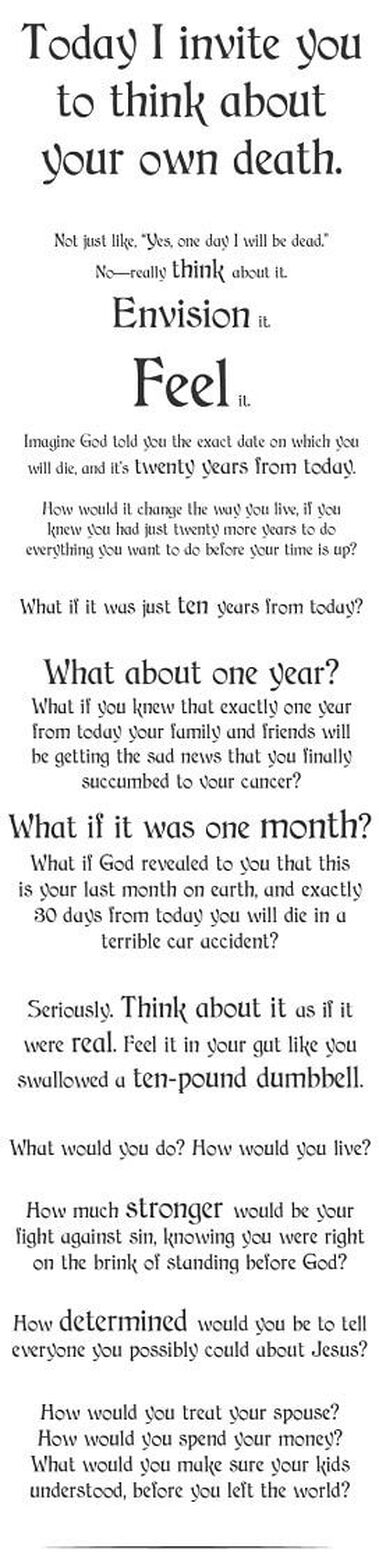
Looking Toward Your Own Death

6/28/2021

0 Comments

 
I discovered this "Think Piece" on preparing for your own death on the internet and thought it worth sharing with you...
Picture
0 Comments

Funeral Etiquette

6/28/2021

0 Comments

 
This infographic is from FuneralBasics.org
Funeral Etiquette - The Eulogy Writers
0 Comments

​How to Write an Obituary

6/28/2021

0 Comments

 
Picture
This step by step guide on how to write an obituary provides helpful information, examples, and guidelines, so that you can compose an appropriate and respectful obituary for a family member or friend.

You don't have to put too much thought into this particular writing assignment, but it certainly does require some planning. It's a good idea to collect a few obituaries from the newspaper or online simply to use as examples and templates. You may also choose to gather a few of your friend's or family members' obituaries if you know any. These examples can be very helpful when compiling an outline or keeping all the necessary information straight.

There are literally thousands of obituaries online. Some examples can show the deceased's career or education, hobbies, and interests. Others can illustrate important events or milestones in his or her life. What you write depends on what you want to emphasize.

If the person's life story is rather short, looking at examples to ‘flesh it out’ will help. If the content is longer, you'll want to stick closer to the basics. Adding a little bit of personal biographical information can really help your content, as well.

Once you've gathered examples of other people's writing, you should consider how to format your own obituaries. The typical method for doing so is to include the deceased's full name in front of a single title, such as "Master Mechanic." For a more unique style, consider including a small section at the top of the obituaries where you can insert a short quote or a phrase that sums up what the deceased meant to the people who knew and loved him or her. Including a personal quote or a sentiment can be a great way to write a funeral obituary, especially if you're having difficulty coming up with one yourself.

Another helpful way to begin your writing is by brainstorming titles based on your starting point. Think about how the person lived, the things he or she did, and the impact that they had on those who knew them best. Try to think of ways you could weave these ideas into your obituary, making them flow well and fitting well with your desired length. If you have any specific ideas for what you'd like to include in your writing, try to incorporate them into your titles.

Once you have an idea for the type of obituaries you want to compose, the next step is to decide whether you would like to address your subjects by their first or last name, or simply by a nickname. If you're using a first or last name, it might be useful to include the middle initial of the subject's last name as well. The obituaries you write for immediate family members should generally use the first name only.

​ Expressions of gratitude for the deceased may be written by you, but should avoid using the last name or any other form of address unless it's clear to the reader that it should be that way. The titles of your family members' obituaries should also be limited to first and last names, as well.

Many funeral professionals encourage the use of obituaries for both adults and children. While adults usually see their loved ones more than children do, many children are less likely to remember their departed friends or family members. That's why some publications provide for the placement of obituaries alongside articles about the life of the departed. These can often be found on the newspaper's classifieds page, or in a separate section of the paper. Some communities also encourage the placement of obituaries alongside other types of content, such as a memorial bulletin.

As you finish putting together the information you'll include in your loved ones' obituary, it's important to choose what kinds of things you'd like to highlight. Do you want to focus on accomplishments, achievements, notable personal characteristics or traits, or stories about the departed?
​
Remember, an obituary is not the same as a eulogy. An obituary is a statement of facts about a persons life. A eulogy is a brief life story of the deceased. An obituary is typically printed in a local newspaper or on a funeral home website. A eulogy is a speech given at the funeral or memorial service or celebration of life.


0 Comments

Guide to Hospice Care

6/28/2021

0 Comments

 
Picture
As an enhancement to this article on Hospice Care, please download Family Caregiver’s Guide to Hospice and Palliative Care 

Although Medicare pays the majority of medical costs for someone who is terminally ill, Medicare does not pay anything towards the cost of assisted living or nursing home care. As well, Medicare will not pay for the costs of prescription drugs while at the same time, Medicare does not cover all types of health-related expenses. This is why it is important that you have as much of a grasp on the financial aspects of both programs as possible. However, you should not let these facts discourage you from continuing with your medical insurance plans.

There are different types of hospice care. The type of care that you receive depends on the type of hospice care that you choose. There are hospitals that provide complete hospice care, which means you do not have to leave your home to receive treatment for your illness; however, this is the most expensive option available for most people. However, there are also hospice programs in which you will be given a care package at the hospital, and then you will be discharged from the hospital and taken back home.

If you are considering a hospice care program, it is good to know that it is a service that can be offered to anyone, regardless of their age. In addition, anyone who suffers from a terminal illness and requires ongoing medical care can be treated at a hospice as well. With a little bit of research, you will soon discover that there are many different types of services that are offered through this type of medical care. As well, you may want to explore the different options that are available when it comes to hospice care.

One of the many types of hospice care is referred to as inpatient respite care. Basically, this is a nursing home environment in which the patient has both medical and spiritual support. This is usually an adult-focused environment in which the patient is cared for by registered nurses or licensed practical nurses. The hospice benefit may also include a wide range of therapeutic services such as exercise programs, massage therapy, art therapies, and other types of non-medical services. Generally, people who are terminally ill are not able to provide their own personal care but need an extensive level of assistance from people who are trained to provide that type of care.

Another form of hospice care is referred to as extended care facilities. These are homes and community settings where the terminally ill patient has an extended period of support beyond what would normally be expected in a hospital. These extended care facilities generally include nurses and/or therapists who work with the patients and their family to develop a personalized care plan. These services generally include but are not limited to medications, medicinal care, spiritual support, and respite care. Many people are amazed by the quality of care that is available in hospice programs and are often even more impressed when they realize that Medicare does not pay for any of these extended services.

There are other options for receiving help when your loved ones are in need of exceptional medical care. Medicaid and the State Children's Health Insurance Program (SCHIP) can play a major role in covering the costs of extended care. You should explore all of your options with a qualified healthcare provider to make sure that your family will be taken care of legally and responsibly. It is important to remember that although medical care is a priority, you do not want to leave anyone in the hands of others simply because you do not have the financial means to cover their needs. It is vital that as a responsible adult, you make decisions that are in the best interests of your minor children.

0 Comments
<<Previous

    Archives

    May 2026
    January 2025
    December 2024
    November 2024
    July 2024
    November 2023
    September 2023
    August 2023
    July 2023
    June 2023
    May 2023
    April 2023
    March 2023
    February 2023
    January 2023
    December 2022
    November 2022
    September 2022
    January 2022
    October 2021
    September 2021
    August 2021
    July 2021
    June 2021
    May 2021

    Author

    Steve Schafer is the founder of TheEulogyWriters.com and has written hundreds of heartfelt eulogies and life tributes for families across the United States and around the world. For more than thirty years, he has helped people find the right words during life’s most meaningful moments. In addition to eulogy writing, Steve now creates Legacy Letters and Legacy Books — personal histories and reflections designed to preserve memories, values, stories, and family heritage for future generations. Steve lives in Texas with his wife and believes that every life holds stories worth remembering and passing on. The articles in this blog are intended to offer comfort, guidance, inspiration, and practical help to those honoring loved ones or preserving a meaningful legacy.


  • FAQ
  • Privacy Policy
  • Terms of Service
  • Testimonials​
The Eulogy Writers and Legacy Letters
105 Hat Bender Ct.
​Georgetown, TX 78633
  • About Steve Schafer
  • Contact
  • How It Works

​Writer: Steve Schafer
Steve's Personal Cell Phone: (734) 846-3072

Steve's Personal email:  [email protected]                   
  • Home
  • Eulogies
    • Collecting Memories
  • Legacy Letters
    • Legacy Letters Questionnaire
  • Legacy Books
  • Life Story Resources
  • FAQ
    • About Steve Schafer
    • Testimonials
    • Privacy Poliicy
    • Terms of Service
  • Blog